Integrated safety technology
Integrated safety technology refers to the seamless integration of safety functions into the automation architecture of an industrial system. In contrast to traditional, separate safety solutions, integrated safety enables the shared use of hardware, software and communication infrastructure for standard functions and safety functions.
Core principles
Integration instead of separation
Safety functions are embedded directly in the control systems – no separate safety controller required.
Centralized project planning
Safety logic is created and managed in the same engineering tool as standard automation.
Seamless connectivity
Safe data transfer via standardized protocols such as Safety over Ethernet or PROFIsafe.
Scalability and modularity
Flexible adaptation to different machine and system concepts. 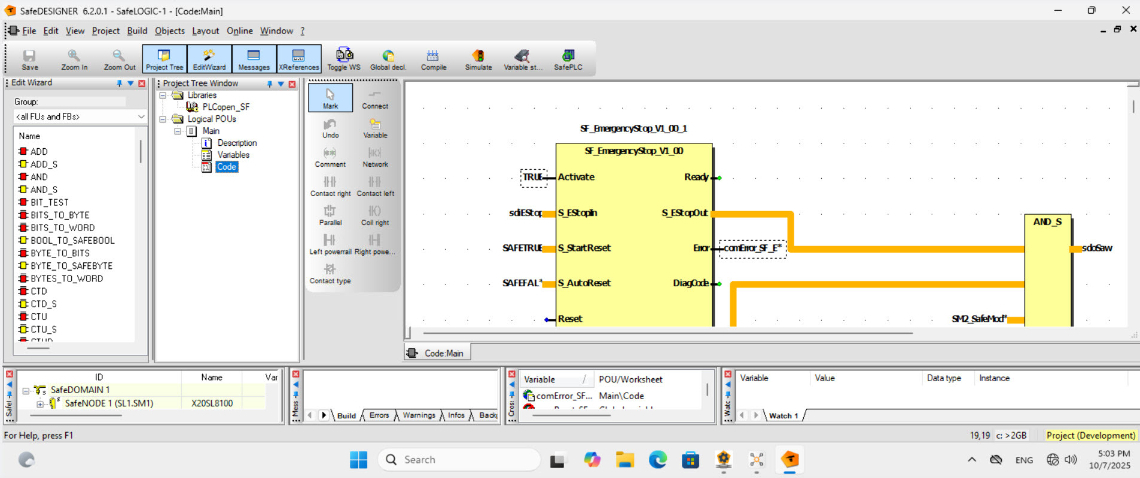
Advantages
Reduced engineering effort
Joint project planning saves time and minimizes sources of error.
Cost effectiveness
Fewer hardware components and less wiring work.
Increased transparency
Uniform diagnostics and HMI for standard and safety functions.
Faster commissioning
End-to-end tools and automated tests speed up the process.
Conclusion
Integrated safety technology is a key concept for modern, efficient and safe automation solutions. It enables a holistic view of functionality and safety – for greater productivity, flexibility and reliability in industrial manufacturing.